


.....Advertisement.....

War's end: LaRue County veterans react

-A A +A
By Ron Benningfield

 December 2011 marked another milestone in American history as the last U.S. combat troops withdrew from Iraq, ending nine years of fighting that saw over 4,000 American fatalities.

According to an Associated Press report, the war also left 32,000 Americans wounded and more than $800 billion spent by the United States on the war.

After any such conflict questions arise: Was the effort worth the cost? Did we accomplish what we went there after?  

Perhaps the best people to answer such questions are those men and women who were there, those who fought in the desert heat and cold. They rode in convoys, wondering as they traveled if the next mile would be broken by the blast of an IED (improvised explosive device), an acronym once unknown to most Americans that now has become commonplace and synonymous with the war.

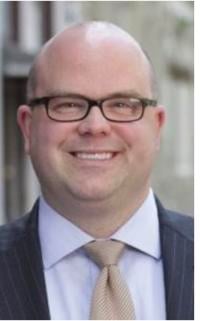
Jonathan Carl, pastor of South Fork Baptist Church, was a tank platoon leader in 2003 with the Fourth Infantry Division stationed at Mosul and Samarra in northern Iraq.

“I think our mission was legitimate. They had used chemical weapons in the past against Iran and a few of our troops did come into contact with chemical weapons. Saddam (Hussein) had boasted, probably as a deterrent to Iran, that he had weapons of mass destruction,” he said. “But, we would never have known the truth if we hadn’t gone there.”

Carl found the Iraqi citizens he encountered to be like Americans in that they wanted to live free.

“Their world has changed for the better because of our presence there,” he said. “They are no longer ruled by a dictator; they have the opportunity to enjoy their freedom.”

He noted other improvements brought about by America’s involvement: 

“When I first arrived, there was little electricity and hardly any television; now they have a free market,” he said.

“I had a lot of my friends injured and killed there, but if we look at the bigger picture, their sacrifices allowed us to fight an enemy in Iraq instead of battling them here in America,” he continued.  

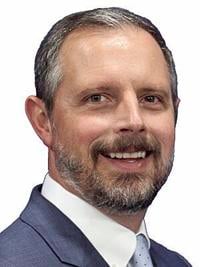
Chief Warrant Officer Four Glenn Phelps of Hodgenville flew Apache helicopters in combat in Iraq in 2004-05. His unit, U.S. Army Reserve 8-229 Aviation Battalion traces its lineage back to the Flying Tigers of World War II fame.

“I’m glad our troops pulled out, but it’s way too late as I would have liked to have seen us pull out a long time ago,” he said. “I’m hopeful the government there can have somewhat of a democracy, but there’s so much political infighting that goes back a long time before we became involved.”

Phelps said good things definitely have happened because of America’s involvement – Sadaam and his sons are gone and the people were freed from a dictator.

“The question is whether or not they can maintain that freedom,” he said. 

“The older generation has been under Sadaam so long that they have that mindset instead of being in a democracy,” he said. “The only thing that will change this is if, like in Bosnia (where he served 1999-2000) where a new generation has lived under democratic rule. It may take getting them through one generation to appreciate what living in a democracy really means.”

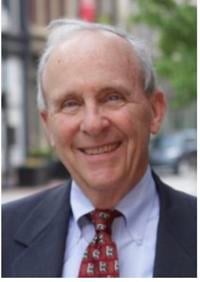
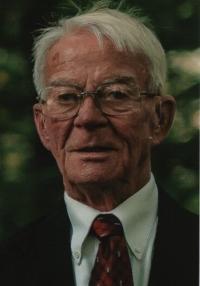
Though he was a part of another war in another time, World War II navy veteran Omer Finn of Hodgenville empathizes with troops seeing the end of combat in Iraq.

“I think the greatest thing that could happen was for them to get out of there,” he said. “I know how good I felt when we learned that Japan had surrendered.”

Like Carl and Phelps, Finn has seen the death and destruction of war firsthand.  He was with U.S. marines who landed on Tarawa where the Americans suffered a bloodbath and he also served in the Gilbert Islands campaign. 

“We accomplished our mission of defeating the Japanese and I think America has also completed its mission in Iraq,” he said. “They got rid of a dictator, and I’m for what we did there so long as it keeps them from fighting here.”

Vietnam vet’s 

perspective

Fred Wells of Hodgenville served four years in the Air Force 1969-73 including a one-year tour of duty as a language instructor of Vietnamese Air Force cadets and officers in Saigon.  

“I was happy to see the troops come home from Iraq,” he said. “The way wars have been fought since Vietnam, I think there can only be losers, but once one American life was lost, the cost was already too dear not to continue.”

Wells remembers how different the withdrawal of U.S. troops from Iraq was to that in Vietnam.

“The pullout of Saigon was hectic, somewhat disorganized and chaotic with people fighting to get into embassy ground to get on a helicopter that had no room for them,” he recalled. “It was not a pullout; it was a mass evacuation.”

“In Iraq, they lined up in a convoy and drove themselves to Kuwait, without any undue duress that I saw,” he continued.

Wells is also aware of the public’s feelings toward today’s soldiers as opposed to the resentment at that time of America’s populace toward the Vietnam War and those who served.

“Now, with the volunteer army, people seem more supportive of the military,” he said. “During the draft years, few people seemed to support the military or the soldiers.”

“Nobody should like war; but everyone should support the people who fight it,” he added. “All the soldiers I see coming home have been given a grand welcome, which they deserve; when I came home, I was jeered, spit at and called names in the airport. Quite a difference.”

Wells said that war is never worth the cost in human lives, but when it is necessary, the price in life and money spent is always steep.

“One American life is too many – one life is too many, but once committed, there has to be follow through,” he said. “Wars would be easier if everybody involved wore a uniform. When they look like ordinary citizens, it is difficult and most likely, unwinnable.”

The LaRue County Herald is your source for local news, sports, events and information in LaRue County, KY, and the surrounding area.