



.....Advertisement.....

Veteran returns to Vietnam as a tourist

-A A +A
By Ron Benningfield

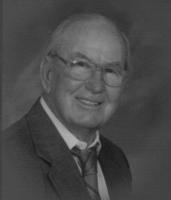
 Working at the 12th Evacuation Hospital in Cu Chi, Vietnam, in 1970, LaRue County native Charles Allen had seen the guts and gore of what war is really like, unlike the glory in which it is often portrayed.

Previous
Play
Next

Now retired and living in Barren County, he and wife Carla had the opportunity in December to return to that country so far away and so long ago in his memory.

“I don’t think I was really seeking closure,” said Allen, a 1964 LaRue County High School graduate and retired teacher.

“I had studied earth science and geology in college and my wife had taken several courses, so as we planned a trip, I wanted to see the rest of Vietnam and both of us wanted to see the architecture and geologic formations there as well.” 

The trip, which had been in the planning stages for over a year, began when the plane landed in Hanoi, about a mile from the hotel where the Allens were staying during the three-week journey.

As soon as they stepped down off the plane, Allen was somewhat surprised by how Westernized what had been North Vietnam had become. 

“Women there were in high heels and jeans everywhere,” he said, unlike the traditional AoDai (generally a type of long, flowing dress). The traffic surprised his wife. Though the streets had marked lanes, every inch was filled with rows of motor scooters with two, three, even entire families balanced on the small machines.

“They had no stop signs, either,” Allen said. “Intersections were almost like a four-way stop where nobody stopped, but everybody dodged and swerved their way across.”

Still prevalent were the cyclos, or “Kamikaze cars” as they had been called when he was a Spec 5 in country. The machine consisted of a motorcycle with a seat similar to that on a school bus, welded in front. Passengers rode in the open seat without seat belt or bar and at the mercy of the driver who didn’t have to observe the non-existent stop signs.

Allen was struck by how friendly and open most of the former North Vietnamese were.

“They called our war the ‘American War’ and seemed to downplay it as though it was a small occupation compared to that of China or France before us,” he said.  “Several of them said it has been their lifelong dream to visit America and all but two or three pictured America as a country whose people try to help other people and do things for their countries.”

“I think they like the American dollar and the tourists that come with it,” he added.

While he was talking to a group of younger Vietnamese, he noticed two or three older men, when they saw him and his wife, didn’t greet them, but turned and walked away.

“I felt a coldness with them, but for the most part the people were friendly,” he said.

The couple was impressed by the beautiful mountain scenery at Hoi An and its picturesque harbor. The city is near DaNang which had housed a large American air base during the war. When they entered DaNang, they noticed the American airplane hangars still there.

They flew into what had been South Vietnam and into Ho Chi Minh City, formerly Saigon.

“It was interesting that our guide spoke about how they liberated South Vietnam from the Americans,” Allen said. “They renamed the presidential palace there as the Unification Palace.”

The two Americans only stayed about five minutes at Saigon’s War Museum.

“Carla and I both became stronger patriots after hearing their propaganda and how they made up the history of what happened from their viewpoint,” Allen said.

Cu chi

He was also somewhat perplexed when he toured what his guide said was his former workplace at Cu Chi.

“I would have loved to have seen the old hospital where I worked but nothing was there where they said it had been,” he said. “I didn’t believe where they said it was, and came away with the impression that they wanted you to see only what they wanted you to see.”

He said the Vietnamese offered tourists the opportunity, for a fee, to fire an AK-47 (North Vietnamese and Viet Cong’s most common weapon) or M-16 rifles (used by Americans during the war).  

“They also have the tunnels open to tourists, the same tunnels that the VC used and burrowed right under us at Cu Chi, but I was too big to get in them,” he said.

Two highlights of their vacation was visiting the historic city of Hue that was nearly destroyed in fighting in early 1968, and Tet, which changed the course of America’s involvement in the war.

“I was impressed with the size and architecture of the Citadel, a former palace,” he said. “You could probably fit a city the size of Elizabethtown inside its walls.”

The two also visited the ruins in Cambodia at Angor Watt with its Oriental building design.

The LaRue County Herald is your source for local news, sports, events and information in LaRue County, KY, and the surrounding area.